
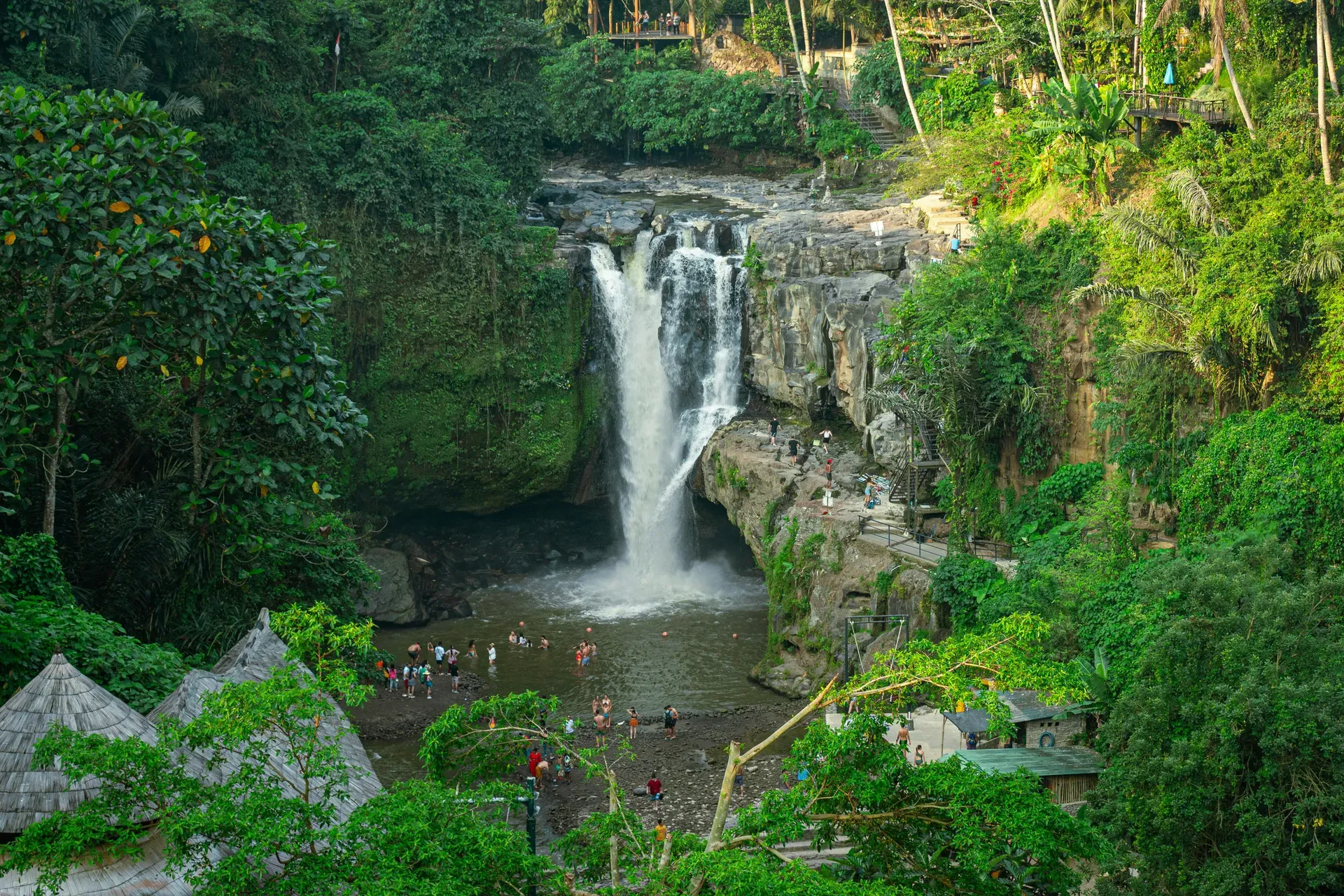
Tegenungan Waterfall drops 15 meters into a low-lying jungle valley just 10 kilometers south of Ubud Center. The site features a 30-meter wide plunge pool fed by the 46-kilometer Petanu River.
Tegenungan Waterfall drops 15 meters over a basalt rock face into a 30-meter-wide plunge pool. The cascade sits at an elevation of 90 meters in a low-lying valley, distinguishing it from the high-altitude falls of northern Bali. Water from the 46.96-kilometer Petanu River feeds the drop, creating a constant roar that echoes off the surrounding jungle canyon. Mist coats the lower viewing platforms long before you reach the final step of the descent. The site opens daily at 06:30, and arriving before 08:00 allows you to experience the valley without the heavy foot traffic that builds throughout the morning.
Access requires navigating 168 concrete steps down the valley wall. The path is paved and lined with steel handrails, but the return climb demands significant physical effort in the typical 80-percent humidity. Visitors arriving between April and October find clear, cool water suitable for swimming. Heavy rains from November to March turn the river into a churning, brown torrent of agricultural runoff. Lifeguards close the water access during these flash-flood conditions, as the water level can rise several feet in a matter of minutes.
Facilities at the site cater to heavy daily traffic from nearby Ubud, located just 10 kilometers to the north. The top ridge holds a sprawling parking lot, ticket booths charging 20,000 IDR for entry, and several multi-story day clubs equipped with elevators and infinity pools. Down at the base, concrete paths route visitors past giant woven bird nests, changing rooms, and small food stalls selling coconuts and bottled water. Bring exact cash, as the local vendors and ticket operators rarely accept credit cards. The descent takes about 10 minutes, but visitors typically spend 1.5 to 2 hours exploring the base, swimming, and resting before attempting the steep climb back to the parking area. Travelers coming from Denpasar face an 18-kilometer journey that typically takes 45 to 50 minutes via Jalan Ir. Sutami. Public transport options remain limited, though the Trans Metro Dewata bus system operates Corridor 4 to the Sakah stop, requiring a short final transfer via scooter taxi.
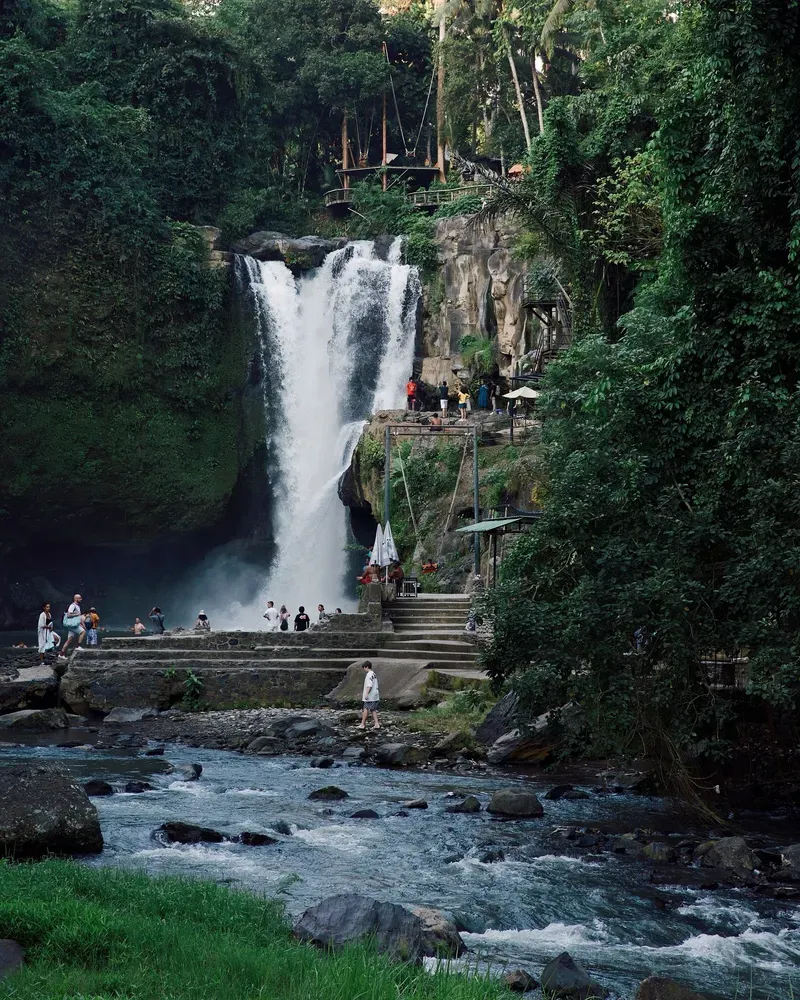
The origins of Tegenungan Waterfall tie directly to the geological formation of the Petanu River valley. Volcanic activity from Mount Batur shaped the central highlands over millennia, carving a 46-kilometer channel that eventually drops over the 15-meter basalt ledge at Kemenuh village. Local records trace human interaction with the site back to the 16th-century Bangli Kingdom. The Bangli Kingdom, established in the late 13th century, reached its peak influence during the 16th century when these rituals were formalized. Balinese royalty and priests utilized the lower river basin as a secluded site for purification rituals, far removed from the primary temple complexes of the era. The constant flow of the Petanu River provided a reliable source of holy water, known locally as tirta, which was transported back to the royal courts for major ceremonies.
For centuries, the waterfall remained a quiet bathing spot known only to the residents of Kemenuh and Blangsinga villages. Farmers utilized the upper river sections for the traditional Subak irrigation system, a cooperative water management method dating back to the 9th century. They diverted water from the Petanu to sustain the surrounding rice terraces, leaving the steep gorge largely untouched. The muddy descent kept casual visitors away. Access required scrambling down unimproved dirt trails that became completely impassable during the rainy season. The site operated entirely outside the formal tourism economy until the early 2010s, functioning primarily as a local gathering place for bathing and washing clothes.
Infrastructure development accelerated rapidly as Ubud expanded southward and social media drove demand for accessible natural sites. The village administrations of Kemenuh on the western bank and Blangsinga on the eastern bank recognized the economic potential of their low-altitude waterfall. They formed a cooperative committee to pave the descent, install safety rails, and build concrete viewing platforms. Local laborers carried bags of cement down the steep inclines by hand, completing the 168-step staircase over a period of eight months in 2015. By 2018, private investors secured land on the upper ridges to construct luxury venues like Omma Day Club and D'tukad River Club. These additions transformed the valley from a quiet spiritual site into a highly commercialized attraction capable of hosting thousands of daily visitors. Today, the local banjar manages the daily operations, using the 20,000 IDR entry fees to fund community temple maintenance, road repairs, and local infrastructure projects.
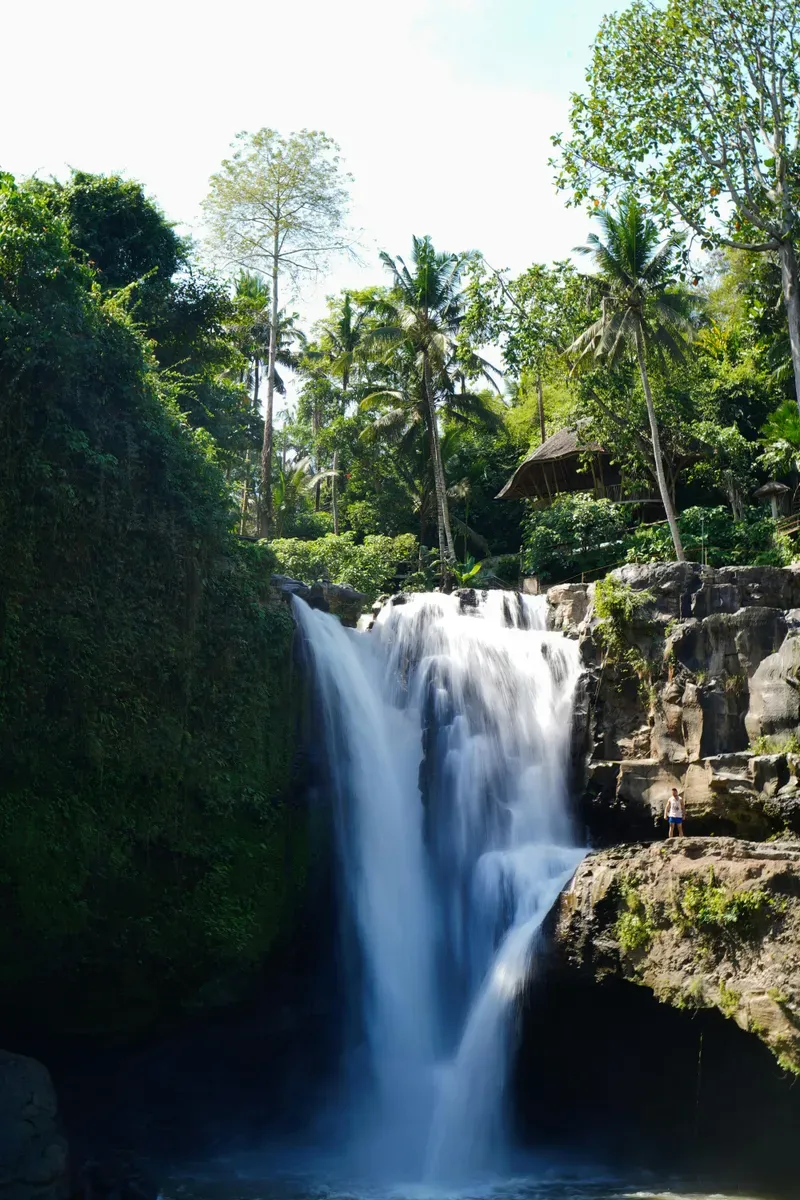
A 15-meter vertical drop characterizes the main face of Tegenungan Waterfall. The water flows over a wide, jagged ledge of dark volcanic basalt, shaped by centuries of erosion from the Petanu River. During the dry season, the flow splits into distinct curtains of water that crash into the 30-meter-wide plunge pool below. The pool reaches depths of roughly two meters near the center, with a rocky, uneven bottom covered in slippery algae. Shallow sections near the edges allow visitors to wade, but hidden submerged rocks make cliff jumping highly dangerous. The current directly beneath the falls generates a strong undertow that requires strong swimming skills to navigate safely.
The surrounding valley walls rise sharply, covered in dense tropical vegetation including towering bamboo groves and ancient banyan trees. Moss and ferns cling to the damp rock faces near the impact zone, sustained by the constant spray. A secondary, smaller cascade sits slightly upstream, accessible via a narrow side path. This upper section offers a closer look at the river's flow before it reaches the main drop, providing a quieter alternative to the crowded main pool. The water temperature hovers around 22 degrees Celsius year-round, providing a sharp contrast to the humid air trapped within the gorge. Along the descent, local artisans have constructed massive, heart-shaped frames and woven bird nests out of dried bamboo and rattan. These structures measure up to three meters in diameter, designed specifically to frame the 15-meter drop for photography.
Recent human additions blend with the natural topography, altering the visual landscape of the valley. Concrete pathways hug the eastern bank, leading to a glass suspension bridge constructed over the river gorge. This transparent structure spans the valley at a height of 20 meters, giving pedestrians a direct downward view of the rapids flowing away from the plunge pool. Visitors crossing the bridge must wear provided slip-on shoe covers to prevent scratching the thick glass panels. Above the tree line, the bamboo and thatch roofs of the day clubs jut out from the cliffside, featuring multi-level infinity pools that visually merge with the waterfall backdrop.
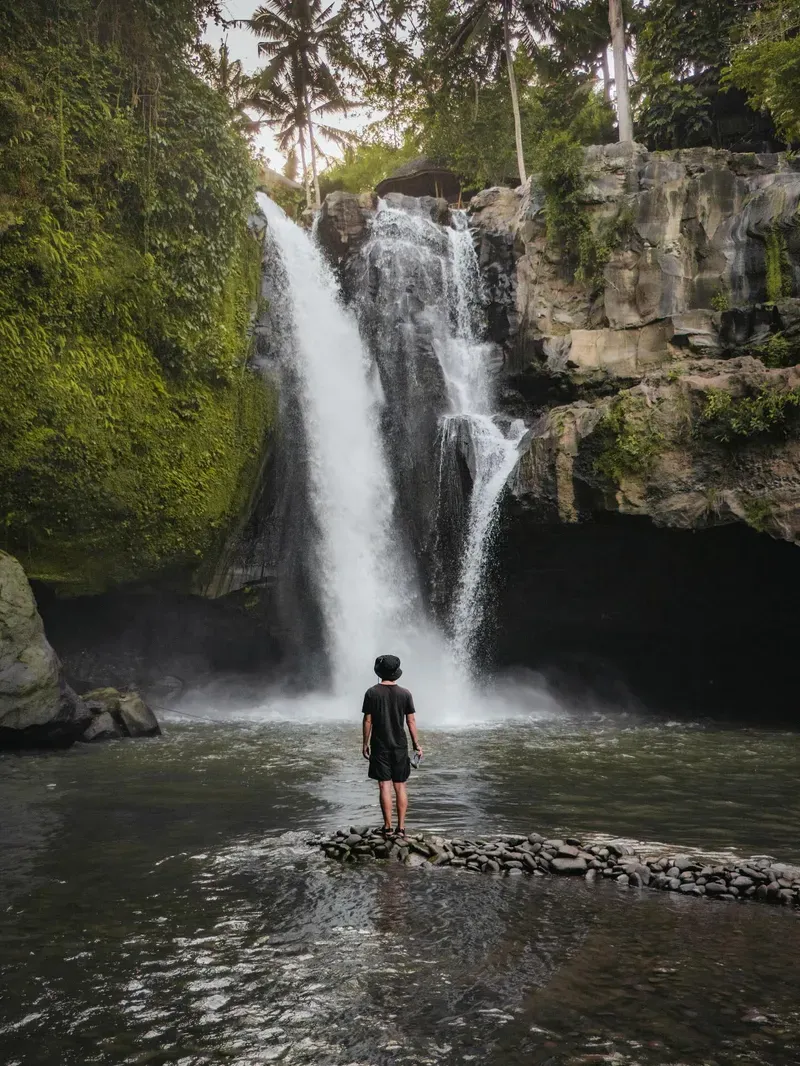
Balinese Hinduism designates the convergence of water as a place of spiritual power. The base of Tegenungan Waterfall houses the Beji Temple, a small but active shrine dedicated to the water spirits. Local residents from Kemenuh and Blangsinga visit this holy spring to collect water for temple ceremonies and perform melukat, a traditional cleansing ritual. The process involves presenting woven palm-leaf offerings known as canang sari, lighting incense, and reciting specific prayers before ducking under the carved stone spouts. The rushing water is believed to wash away spiritual impurities, negative energy, and physical ailments.
The Petanu River itself carries a dark mythology rooted in ancient Balinese texts. Legends describe the river forming from the blood of the demon king Mayadenawa, who was defeated by the god Indra during a massive battle in the nearby region of Tampaksiring. Traditional beliefs dictate that water from the main flow of the Petanu should not be used for drinking or irrigating rice fields meant for temple offerings, as it carries a cursed history. The water at the Beji spring, however, is considered entirely pure. It filters through the earth and rock before emerging at the temple, bypassing the cursed main channel entirely.
Tourists share the valley floor with these ongoing religious practices. Sections of the lower basin near the spring are frequently cordoned off with yellow and white umbrellas, marking active ceremonial zones. Visitors must avoid entering these specific areas to maintain the sanctity of the space. Anyone wishing to approach the temple boundaries or participate in a blessing must wear a traditional sarong and sash, regardless of their religious background. Local priests maintain a strict separation between the recreational swimming areas and the sacred temple grounds, ensuring the site retains its religious function despite the heavy daily tourist traffic. During major Balinese holidays like Galungan and Kuningan, the temple sees a surge in activity. Entire families descend the 168 steps dressed in full ceremonial attire, carrying towering fruit offerings on their heads. The contrast between the solemn religious processions and the surrounding recreational beach clubs highlights the dual nature of modern Bali.
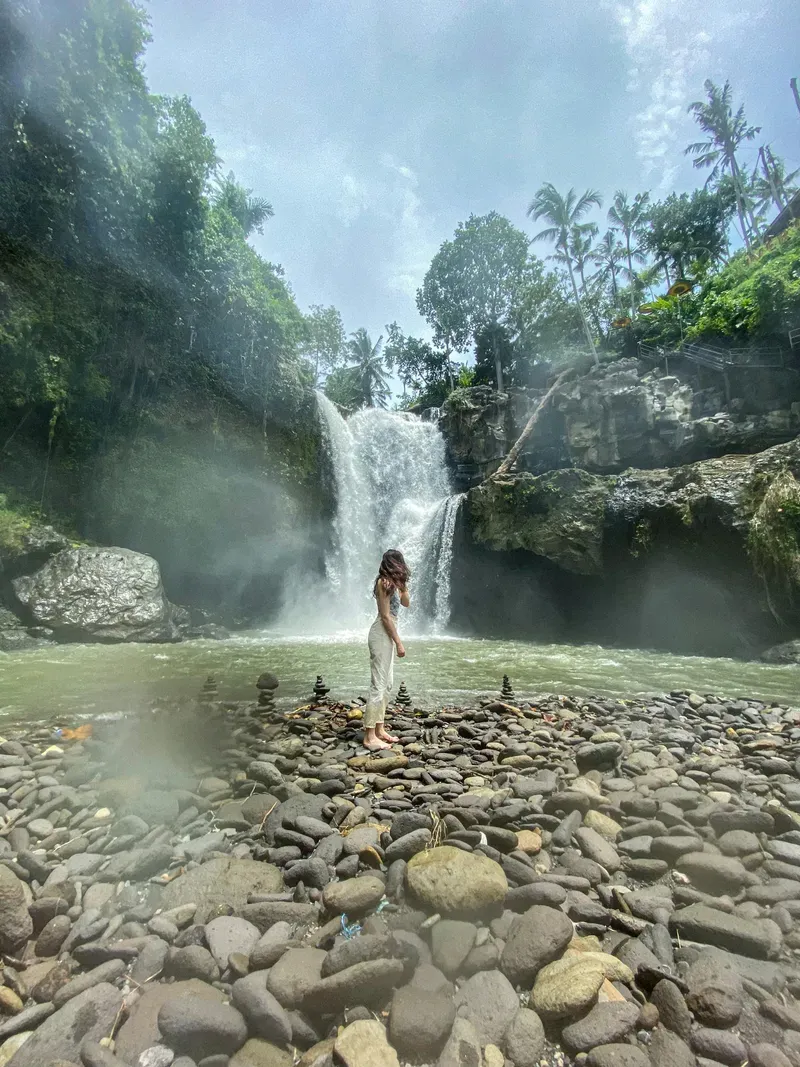
You can enter the waterfall from either the Kemenuh village side or the Blangsinga village side, each offering different viewpoints.
Balinese mythology claims the Petanu River was formed from the blood of the demon king Mayadenawa, making its water traditionally taboo for drinking.
Professional photographers must pay a 300,000 IDR permit fee to shoot pre-wedding photos at the base of the falls.
While the public path requires climbing 168 steps, the private Omma Day Club operates an elevator for its guests to reach the lower viewing decks.
A recently constructed glass suspension bridge crosses the river valley just downstream from the main waterfall drop.
The 46-kilometer Petanu River collects massive amounts of runoff during storms, turning the clear pool into a dangerous brown torrent within hours.
A small Beji temple sits at the bottom of the gorge, used by locals for the 'melukat' water purification ritual.
Yes, swimming is permitted in the 30-meter natural pool at the base. Lifeguards restrict water access during heavy rain when currents become dangerously strong.
The descent requires navigating 168 concrete steps. The path features steel handrails, but the climb back up demands significant physical exertion in the high humidity.
Adult entry costs 20,000 IDR, payable in cash at the ticket booths. Parking attendants may also charge a 5,000 IDR fee for scooters.
No public elevator exists for general admission. The private Omma Day Club operates an elevator exclusively for its patrons, providing access to lower viewing platforms.
April to October offers the clearest water and dry trekking conditions. The rainy season from November to March fills the river with agricultural runoff, turning the water brown.
The site is located 10 kilometers south of Ubud Center. A scooter ride takes 20 to 30 minutes via Jalan Raya Ubud and the roads toward Kemenuh village.
Basic changing rooms and toilets operate near the plunge pool. Vendors charge a maintenance fee of roughly 5,000 IDR to use these facilities.
Drone flights are generally permitted, but the narrow valley and heavy mist create challenging flying conditions. Operators should watch for other drones launched from the nearby day clubs.
The base is completely inaccessible to wheelchairs due to the steep stairs. Visitors with mobility issues can view the 15-meter drop from the paved upper parking area.
Standard swimwear and casual clothing are acceptable for the waterfall and pool. A sarong and sash are only required if you enter the boundaries of the nearby Beji Temple.
Browse verified tours with free cancellation and instant confirmation.
Find Tours